EVEREST BASE CAMP
2(Min) -12(Max)
5545m
sep-nov
Overview
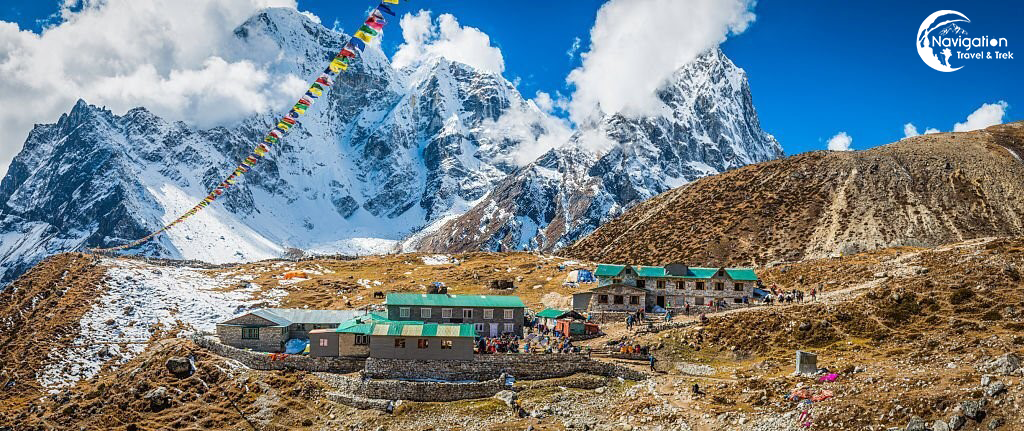
Everest Base Camp Trek commonly known as EBC Trek is high on travelers’ bucket lists all around the world. It’s because the walk to Everest Base Camp provides a spectacular close-up view of Mount Everest, the world’s highest mountain, from every angle. Every year, a large number of people visit the Himalayas. Some seek to climb to the top of Mount Everest to prove that they can overcome the problems that high altitude and a lack of oxygen create, while many just want to admire the spectacular views of lower portions of the Himalayas surrounding summits like Everest, Lhotse, Nuptse, Pumori, and Ama Dablam. Everest is more than merely a mountain, and the journey to its base camp is more than a hike. Along a route dubbed “the steps to heaven,” you will see breathtakingly beautiful scenery unlike any mountainous terrain you have ever seen before, changing from lush green farmland, dense forest, and glistening blue fast-flowing rivers to the barren land and glacial pools as you climb, and you will realize you made the right decision. Trekking to Everest Base Camp is a once-in-a-lifetime event for many people, and it is not a difficult task despite the camp’s altitude of 5 550 meters above sea level. The path takes you through some of the most breathtaking Himalayan scenery.
Trekking to Everest Base Camp is not as difficult as it appears. But it’s also not that simple. Regardless, you have our support. We will assist you in reaching the summit of Mt. Everest. It is not as difficult as it appears to trek to Everest Base Camp. However, it is not that straightforward. It requires a great deal of determination and good fortune. In any case, you have our assistance. We will help you reach the summit of the great Mt. Everest.
Itinerary
Our guide will meet you at the airport to take you on a thrilling trip to Lukla. Following an exciting journey, you will begin your trek to the Everest Base Camp. After getting ready, the tour guide will lead you down the crowded street to the start of the trip down to Phakding. You will walk along the Dudh Koshi River and alpine forest, listening to nature’s sensations. After that, you’ll cross the suspension bridge to get to Phakding.
 Destination
Phakding

Lodge

Lunch, Dinner

2652m

4hr
Namche Bazaar (3440m). You will enter Sagarmatha National Park by continuing down the Dudh Koshi River (registering your TIMS card). You will begin to ascend towards Namche Bazaar after continuing along the river. Because this is the first altitude jump, it is critical to take it easy on the way up.
Destination
Namche Bazar
Lodge
Breakfast, Lunch, Dinner
3440m
6hr
Today is the break day for the important rest of your body. It’s a day kept aside for adapting to a new environment at Namche Bazaar. In the days to come, you will trek to high altitudes with thin air, so it’s very important to make your body adapt to a new environment. Your guide will take you around Namche to the viewpoint and Sherpa Museum.
Destination
Namche Bazar
Lodge
Breakfast, Lunch, Dinner
3440m
3hr
We leave Namche and take a trail to Tengboche. We begin by descending to the Dudh Koshi Valley at Phungi-Thanka and gradually ascending to Tengboche. You will now be standing between the mountains. Some of the highest mountains that will watch you trek the gorgeous trail include Mt. Ama Dablam, Mt. Lhotse, Nuptse and Mt. Everest. You will hike through the Imja Khola to Tengboche, the spiritual hub of the Khumbu Region. Tengboche is famed for its Buddhist temple, Tengboche Monastery. It’s a historic monastery at a high altitude with spectacular views of the Everest region. Make sure to check out the monastery’s magnificent murals and sculptures.
Destination
Tengboche
Lodge
Breakfast, Lunch, Dinner
3860m
5hr
This is an overall great day’s hike. You will see yak farms, chortens, monasteries, and breathtaking mountain views as you go via Sherpa settlements Shomare and Pheriche. The day concludes in Dingboche, where you may enjoy beautiful views and the valley below the mountain desert.
Destination
Dingboche
Lodge
Breakfast, Lunch, Dinner
4410m
6hr
Another day has been set aside for acclimatization. As we continue to go to higher elevations, we must acclimate to protect our health and safety. Today, adjust to the high altitude and prepare for the difficult walk to Everest Base Camp. At the highest of 5100 meters, the Nagerjun hill is a beautiful viewpoint in the Everest locale. We have spectacular views of the range’s lofty peaks from Nagerjun, including Lobuche, Thamserku, Taboche, Kangtega, Mt Ama Dablam, Nuptse, Cholatse and many others. The hike also provides an excellent opportunity to catch a glimpse of Mt. Makalu, the world’s fifth-highest peak. After some rejuvenating time on the hill, we descend to explore the Dingboche communities.
Destination
Dingboche
Lodge
Breakfast, Lunch, Dinner
4410m
3hr
You’re getting closer to Everest Base Camp with each passing day. As we continue to ascend, you might find yourself tussling. Maintain a slow pace and explain your feelings to your guide. We begin by following a trail between broad valleys until we reach Dughla. We will reach Lobuche after going through some yak fields. The trails are now barren and covered in snow. You’ve made it above the tree line. As a result, you will notice a lack of trees and green slopes. Here in Lobuche, there are no permanent Sherpa villages. You will be surrounded by stunning views of high mountains just beside tea houses.
Destination
Lobuche
Lodge
Breakfast, Lunch, Dinner
4910m
6hr
The wait is finally over. You are now in the most ordinary days of your adventure. After an early breakfast, we travel to Gorakshep, which is located at a height of 5181 meters. The area is likewise sparsely populated, with only a few guest houses open during trekking seasons. At 4900 meters, you climb through the Khumbu Glacier, the world’s tallest glacier. The glacier is 12 kilometers long and shaped like a moon. You tour the area and see the glory of the greatest peaks rise right in front of you. After collecting memories along the trip trails, the Sagarmatha expedition group’s campsite and the Khumbu glacier, we return to Gorakshep.
Destination
Everest Base Camp- Gorakshep
Hotel
Breakfast, Lunch, Dinner
5340m
8hr
Today, you will have the best view of Mt. Everest with your own eyes. It’s the second most anticipated day of your EBC adventure. So, will get up before the sun and make your way to Kalapatthar at 5545 meters. It is the peak of your trekking adventure. We capture the golden rays of the sun falling over Mt. Everest’s sparkling snow, as well as other towering peaks in the range, from Kalapatthar. After that, begin your descent to Pheriche. In Pheriche, there is a small village. It also includes a Himalayan Rescue Association clinic (HRA). When you arrive at Pheriche, take in the surrounding scenery before retiring to your accommodation to rest after a Himalayan meal.
Destination
Pheriche
Lodge
Breakfast, Lunch, Dinner
5545m
7hr
The trail descends to Orso, Somare and Pangboche, following the west bank of the Imja River. Then we climb through deep woodland to Debuche and Tengboche, then drop to Phunki Thenga for the final ascent to Sanasa. We eventually find an easy track and follow it to Namche.
Destination
Namche
Lodge
Breakfast, Lunch, Dinner
3440m
7hr
Get up calmly in the lap of the mountains. Trekking from Namche, the trail descends steeply to the Jorsaley National Park border, crossing a suspension bridge over the Dudh Koshi River. The trek retraces the path from Phakding to Lukla, taking in the beautiful scenery along the way. At Lukla, celebrate your successful completion of the challenging trek.
Destination
Lukla
Lodge
Breakfast, Lunch, Dinner
2800m
7hr
Your trekking concludes with an adventurous flight. Enjoy the sights and bid farewell to the mountains and the hills. After you board in flight from Lukla to Kathmandu, you will fly again with a sight of the highest mountains. You will recognize most of them through your window. After you land, our guide will transfer you to your hotel.
If you want to extend your Nepal vacation for a longer period, please let us know. We will assist you with your plans hoping that you had a wonderful time with our crew members. Thank you and have a safe trip home.
Destination
Kathmandu
Breakfast
1400m
1hr
Altitude Graph
Inclusion/Exclusion
The Cost Includes
- Three meals a day during the Trekking (Breakfast, Lunch and Dinner).
- Accommodations in Tea House/Lodge during the Trekking.
- Pokhara-Kathmandu – Lukla – Kathmandu flight costs (includes tax and government fees).
- Trekking Guide, assistant trekking guide for groups with 12 or more trekkers and a porter (Sharing by two clients) with Insurance, food, and accommodations.
- Sagarmatha National Park Entry Permit.
- Khumbu Pashang Lhamu Rural Municipality fees.
- Water purification tablets for safe drinking water.
- Experienced and licensed Sherpa Climbing Guide fee.
- Tent and camping staff with the kitchen crew.
- Snacks (cookies) and seasonal fresh fruits every day.
- Rescue operation arrangement in case of complicated health conditions (funded by travel insurance).
- Proper First Aid kit.
- A TIMS card (Trekking Information Management System) is like a permit.
- All government, local taxes, and official expenses.
- The company’s duffel bag will also be provided. (If needed).
- All essential official fees.
Service not included in the Price
- International flight cost.
- Your travel insurance.
- Excess baggage charge (weight limit 9 kg per person).
- On arrival visa fees at Tribhuvan International Airport (30 days- USD 50).
- All accommodations and meals in Kathmandu, before and after the trek.
- Extra night accommodations in Kathmandu due to early arrival, late departure, or early return from the trek.
- Personal expenses (shopping, snacks, boiled water, hot (tea/coffee) and cold drinks, hot shower, alcohol, Wi-Fi, telephone call, battery re-charge fee, extra porters, etc.
- Tips for the Guide and Porter(expected).
- Travel insurance that covers emergency high-altitude Heli – rescue and evacuation and health care costs (compulsory).
- Additional costs or delays due to circumstances beyond our control like bad weather conditions, itinerary modification for safety, government policy changes.
Useful Info
Trekking to Everest Base Camp is a once-in-a-lifetime event for many people, and it is not a difficult task despite the camp’s altitude of 5,545 meters above sea level. The path takes you through some of the most breathtaking Himalayan scenery. The greatest time to visit Everest Base Camp is either side of the monsoon season, which runs from late May to mid-September. Late September-November and February-May are the peak trekking months, with rather stable conditions, decent visibility, and temperatures at Base Camp reaching -6°C. Furthermore, we strongly suggest all of our valued clients come to Pokhara one day before their trip departure date, to participate in the trek briefing. The trip briefing allows you to double-check critical gear and equipment, as well as learn about weather and route conditions. You need to obtain some permits to complete the trekking for which we will assist you. The safety and health issues are the major concerns which will be taken care of.
Send Request
You can send your enquiry via the form below.
Trip name: * EVEREST BASE CAMP